Percentage Basics
ay 1: Percentage Basics
1. What is Percentage?
The word Percent means “per hundred”.

Example
Out of 50 students, 40 passed.
Percentage passed
= (40/50) ×100
= 80%
2. Convert Fraction → Percentage
Multiply the fraction by 100.
Examples
1/2
=50%
1/4
=25%
3/5
=60%
7/8
=87.5%
3. Convert Percentage → Fraction
Remove % and divide by 100.
Examples
75%
=75/100
=3/4
20%
=1/5
12.5%
=1/8
4. Convert Decimal → Percentage
Multiply by 100.
Examples
0.25
=25%
0.5
=50%
0.75
=75%
1.2
=120%
5. Important Fraction–Percentage Table (Must Memorize)
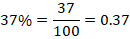
Percent of the whole
%
Percent of the whole
| Fraction | Percentage | Decimal |
| 1/2 | 50% | 0.50 |
| 1/3 | 33⅓% | 0.333… |
| 2/3 | 66⅔% | 0.666… |
| 1/4 | 25% | 0.25 |
| 3/4 | 75% | 0.75 |
| 1/5 | 20% | 0.20 |
| 2/5 | 40% | 0.40 |
| 3/5 | 60% | 0.60 |
| 4/5 | 80% | 0.80 |
| 1/8 | 12.5% | 0.125 |
| 3/8 | 37.5% | 0.375 |
| 5/8 | 62.5% | 0.625 |
| 7/8 | 87.5% | 0.875 |
SSC Tip: Memorize this table. It saves a lot of calculation time.
6. Percentage of a Number
Formula
Percentage × Number
Example
25% of 480
=25/100×480
=120
Shortcut
25%
=1/4
480÷4
=120
Example
12.5% of 800
=1/8×800
=100
Example
75% of 600
=3/4×600
=450
7. Fast Percentage Tricks
| Percentage | Shortcut |
| 50% | Half |
| 25% | ÷4 |
| 20% | ÷5 |
| 10% | ÷10 |
| 5% | Half of 10% |
| 1% | ÷100 |
| 0.5% | ÷200 |
| 12.5% | ÷8 |
| 75% | 3/4 |
| 33⅓% | 1/3 |
| 66⅔% | 2/3 |
Example
5% of 480
10% =48
Half =24
Answer = 24
Example
20% of 450
450÷5
=90
8. Percentage Increase
Formula
Increase %
=(Increase/Original)×100
Example
Salary
₹20000 → ₹24000
Increase =4000
Increase %
=(4000/20000)×100
=20%
9. Percentage Decrease
Formula
Decrease %
=(Decrease/Original)×100
Example
Price
₹500 → ₹450
Decrease =50
Decrease %
=(50/500)×100
=10%
Day 2: SSC CGL Level Percentage
10. Successive Percentage Change



%


%

Start100
After p₁150
After p₂75
Overall percent change-25%
Shortcut Formula
Overall % = a + b + (ab/100)
Example
Increase 20%
Then increase 30%
=20+30+6
=56%
Example
Increase 20%
Then decrease 10%
=20−10−2
=8%
Example
Decrease 30%
Then decrease 20%
=−30−20+6
=−44%
Overall decrease = 44%
11. Population Increase
Formula
New Population
=Old Population×(100+Increase)/100
Example
Population =10000
Increase =10%
New Population
=10000×110/100
=11000
12. Population Decrease
Population
=50000
Decrease =20%
New Population
=50000×80/100
=40000
13. Expenditure Questions
Income = ₹100
Saving = ₹20
Expenditure = ₹80
If expenditure increases by 25%
New expenditure
=80×125%
=100
Saving becomes ₹0.
14. Marks Questions
Maximum Marks =500
Obtained =425
Percentage
=(425/500)×100
=85%
15. Reverse Percentage
Example
After increasing by 20%, salary became ₹24000.
Original salary
=24000×100/120
=₹20000
Shortcut
Original
=Final×100/(100±%)
Use + for increase and − for decrease.
16. Important SSC Tricks
Trick 1
x% of y = y% of x
Example
25% of 400
=400% of 25
=100
Trick 2
Increase by x%
Multiply by
(100+x)/100
Trick 3
Decrease by x%
Multiply by
(100−x)/100
Trick 4
If value doubles
Increase =100%
Trick 5
If value becomes half
Decrease =50%
SSC CGL Practice Questions
Easy
- 20% of 300 = ?
- 75% of 400 = ?
- 12.5% of 640 = ?
- Convert 3/5 into percentage.
- Convert 80% into fraction.
Moderate
- Salary increases from ₹25000 to ₹30000. Find the percentage increase.
- Price decreases from ₹800 to ₹680. Find the percentage decrease.
- After a 20% increase, a price becomes ₹720. Find the original price.
- Increase 25%, then increase 20%. Find the overall increase.
- Decrease 10%, then decrease 20%. Find the overall decrease.
SSC CGL Level
- A number is increased by 25% and then decreased by 20%. What is the net percentage change?
- A shopkeeper marks up an item by 40% and then offers a 10% discount. What is the overall percentage gain over the cost price if the marked price was based on cost?
- A student’s marks increase from 360 to 450. Find the percentage increase.
- A population grows by 15% in one year and by 20% the next year. Find the total percentage increase.
- Income increases by 20% and expenditure increases by 10%. If the original saving was 20% of income, does the saving increase or decrease?
Answer Key
- 60
- 300
- 80
- 60%
- 4/5
- 20%
- 15%
- ₹600
- 50%
- 28%
- No net change (0%)
- 26%
- 25%
- 38%
- Saving increases (from ₹20 to ₹30 if original income is ₹100).
2-Day Study Plan
Day 1 (Basics)
- Percentage meaning
- Fraction ↔ Percentage ↔ Decimal conversions
- Percentage of a number
- Quick calculation tricks
- 50 practice questions
Day 2 (SSC CGL Level)
- Percentage increase/decrease
- Successive percentage changes
- Reverse percentage
- Population, marks, expenditure, and income problems
- 100 mixed practice questions
Target: After completing these two days, you should be able to solve most SSC CGL percentage questions in 20–40 seconds with consistent practice.
Chapter 1: Percentage Increase & Decrease
Formula
Increase %
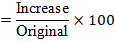
Decrease %
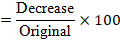
Example 1
Salary = ₹40,000
New Salary = ₹46,000
Increase = ₹6,000
Percentage Increase
= (6000/40000)×100
= 15%
Example 2
Price = ₹800
New Price = ₹680
Decrease = ₹120
Percentage Decrease
=(120/800)×100
= 15%
SSC Shortcut
| Change | Multiplier |
| +10% | ×1.10 |
| +20% | ×1.20 |
| +25% | ×1.25 |
| +50% | ×1.50 |
| -10% | ×0.90 |
| -20% | ×0.80 |
| -25% | ×0.75 |
| -50% | ×0.50 |
Chapter 2: Successive Percentage Change



%


%

Start100
After p₁150
After p₂75
Overall percent change-25%
Shortcut Formula
Overall Change
= a + b + (ab/100)
where increases are positive and decreases are negative.
Example 1
Increase 20%
Then Increase 30%
20+30+6
= 56% Increase
Example 2
Increase 20%
Then Decrease 10%
20−10−2
= 8% Increase
Example 3
Decrease 30%
Then Decrease 20%
−30−20+6
= 44% Decrease
SSC Golden Rule
Two equal opposite percentage changes do not cancel.
Example
+20%
−20%
Net
20−20−4
= 4% Decrease
Chapter 3: Reverse Percentage
When the final value is given and the original value is required.
Formula
Original
= Final ×100/(100±%)
Use + after an increase and − after a decrease.
Example 1
After increasing by 20%, salary became ₹24,000.
Original
=24000×100/120
= ₹20,000
Example 2
After decreasing by 20%, price became ₹640.
Original
=640×100/80
= ₹800
Chapter 4: Population Problems
Population after increase
New Population
=Old×(100+Rate)/100
Example
Population = 20,000
Increase =15%
New Population
=20000×115/100
= 23,000
Population after decrease
Old×(100−Rate)/100
Example
Population =80,000
Decrease =10%
New
=80000×90/100
= 72,000
Chapter 5: Marks Problems
Formula
Percentage
=(Obtained/Maximum)×100
Example
Maximum Marks =600
Obtained =468
Percentage
=(468/600)×100
= 78%
Reverse Marks
If 80% marks = 480
Maximum Marks
=480×100/80
= 600
Chapter 6: Expenditure Problems
Formula
Expenditure
=Income−Saving
Example
Income =₹50,000
Saving =20%
Saving =₹10,000
Expenditure =₹40,000
SSC Trick
Take Income =100
Saving =20
Expenditure =80
If expenditure increases by 25%
New expenditure
=80×125%
=100
Saving becomes 0
Chapter 7: Income Problems
Income increases by 20%.
Expenditure increases by 10%.
Original Income =100
Saving =20
Expenditure =80
New Income =120
New Expenditure =88
Saving =32
Increase in Saving
=(32−20)/20×100
= 60%
SSC CGL Mixed Practice Set (30 Questions)
Percentage Basics
- 20% of 450
- 12.5% of 960
- 37.5% of 240
- 62.5% of 640
- 5% of 680
Increase & Decrease
- ₹400 → ₹500
- ₹800 → ₹680
- ₹1200 → ₹1560
- ₹500 → ₹450
- ₹300 → ₹360
Successive Change
- +20%, +30%
- +15%, −10%
- −20%, −30%
- +25%, −20%
- +50%, −40%
Reverse Percentage
- After +20%, salary = ₹36,000
- After −10%, price = ₹900
- After +25%, marks = 500
- After −20%, population = 24,000
- After +40%, income = ₹56,000
Population
- Population 50,000 increases by 12%
- Population 80,000 decreases by 15%
- Population 12,000 increases by 25%
- Population 48,000 decreases by 20%
- Population 15,000 increases by 18%
Marks & Income
- 420 out of 600
- 405 out of 450
- Income ₹60,000, Saving 25%
- Income ₹80,000, Saving 15%
- Income increases 25%, Expenditure increases 10%, Saving initially 20% of income—find the percentage increase in saving.
Answers
- 90
- 120
- 90
- 400
- 34
- 25% increase
- 15% decrease
- 30% increase
- 10% decrease
- 20% increase
- 56% increase
- 3.5% increase
- 44% decrease
- No net change
- 10% decrease
- ₹30,000
- ₹1,000
- 400
- 30,000
- ₹40,000
- 56,000
- 68,000
- 15,000
- 38,400
- 17,700
- 70%
- 90%
- ₹45,000 expenditure
- ₹68,000 expenditure
- 85% increase in saving
For a complete workbook
A Zero to SSC CGL Percentage Master Book with 100 solved examples, 100 practice questions, short tricks, previous year SSC questions, and detailed solutions would span roughly 50–60 pages. It’s best created chapter by chapter rather than in one chat response.
About The Author
